Reader-supported: we may earn a commission if you buy through links on this page, at no extra cost to you. Learn more · How we choose products
You unboxed your new juicer, washed a pile of produce and now you are not quite sure where to start. That is completely normal. Learning how to use a juicer is simple once you know the basics, and a few smart habits make a huge difference in how much juice you get and how easy cleanup is.
This beginner guide walks you through every step: setting up your juicer, prepping produce, the best feeding order, getting more juice from leafy greens, cleaning your machine in minutes and storing fresh juice. You will also find tips for different juicer types, easy first recipes and common mistakes to avoid.
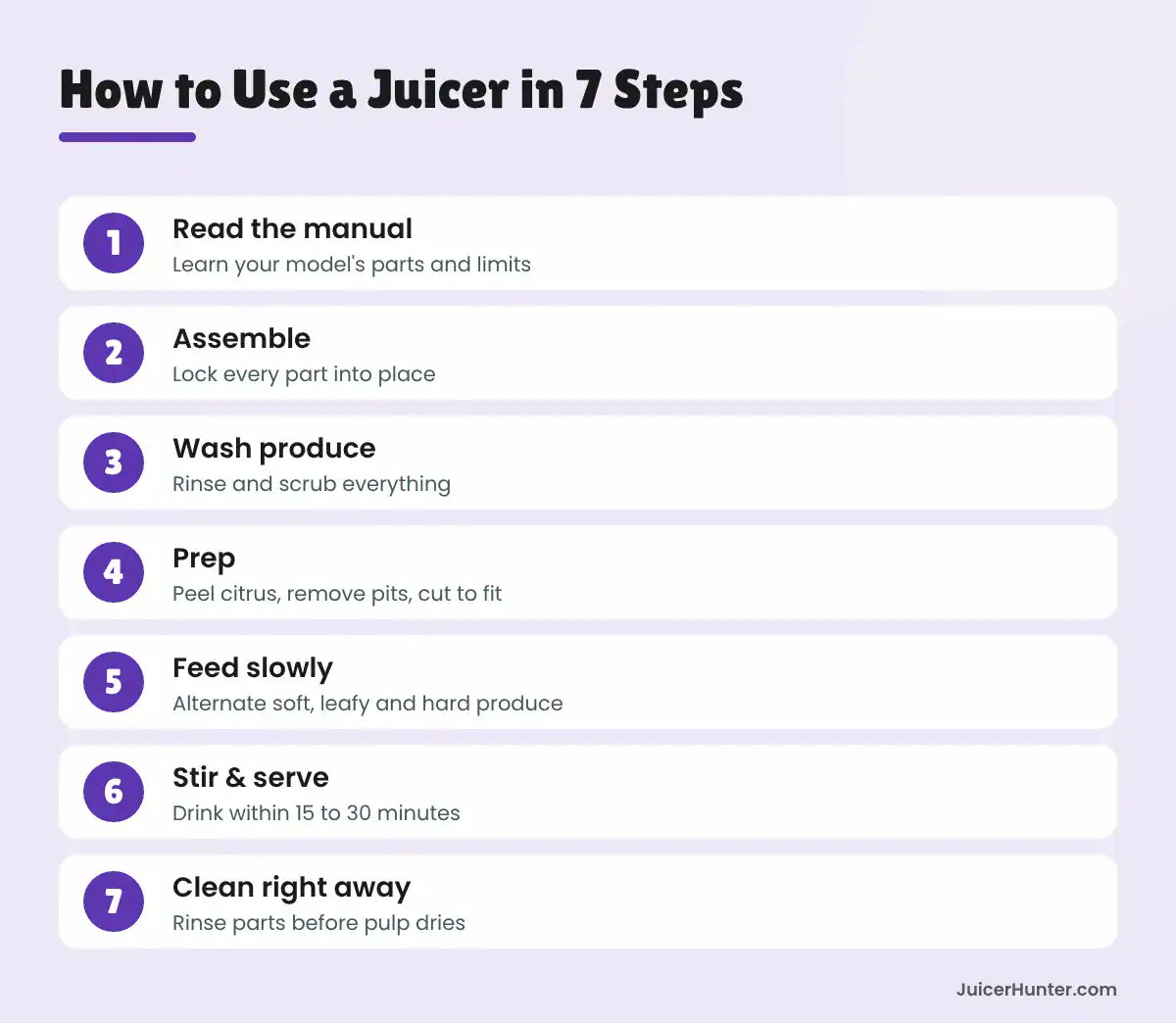
In short: To use a juicer, assemble it according to the manual, wash your produce, peel citrus, remove pits and cut everything to fit the chute. Turn the juicer on and feed produce slowly with the pusher, starting with soft items, then leafy greens, then hard produce like carrots and apples. Stir the juice, drink it within 15 to 30 minutes and rinse every part right away so the pulp does not dry on.
Different juicers work in different ways, so it helps to know which kind you have.
Juicer type
How it works
Best for
Centrifugal
Fast spinning blade and mesh basket
Apples, carrots, beets, cucumbers
Masticating (slow)
Slow auger crushes and presses
Leafy greens, wheatgrass, mixed juices
Twin-gear
Two gears crush finely
Greens and high yields
Citrus
Spinning or pressing cone
Oranges, lemons, limes
Not sure which you own? Our types of juicers guide explains each one, and our masticating vs centrifugal juicer post covers the two most common types.
Before Your First Use
Read the manual. Every juicer has its own parts, limits and safety rules.
Wash all removable parts in warm soapy water to remove dust from packaging.
Dry everything before assembling.
Find a good spot on a flat, dry counter near an outlet.
Practice assembling and taking it apart once or twice. It makes cleaning faster later.
How to Use a Juicer: Step by Step
It helps to understand this before you master how to use a juicer.
Follow these seven steps every time you juice.
Step 1: Assemble the Juicer
Put the parts together in the order shown in your manual. Most juicers have a safety lock, so the motor will not start unless everything is locked in place.
Step 2: Wash Your Produce
Rinse fruits and vegetables under cool running water. Scrub hard produce like carrots and beets with a brush. The FDA recommends washing produce even if you plan to peel it.
Step 3: Prep Your Produce
Peel citrus like oranges, lemons and grapefruit. The peel is bitter.
Remove pits from peaches, cherries, mangoes and plums.
Peel tough skins like pineapple, mango and kiwi.
Cut produce to fit the chute. Slow juicers with narrow chutes need smaller pieces.
Cut fibrous produce short. Chop celery, ginger and pineapple core into 1-inch pieces so they do not wrap around the auger.
Step 4: Set Up Your Containers
Place the juice cup under the juice spout and the pulp container under the pulp outlet.
Step 5: Start Juicing
Turn on the juicer and feed produce slowly. Use the pusher, never your fingers. Let the machine pull produce in at its own pace.
Step 6: Use the Right Feeding Order
The order you add produce matters. A good rule:
Soft produce first (berries, tomatoes, cucumber).
Leafy greens next, rolled into bundles.
Hard produce last (carrots, apples, beets). They help push leftover greens and pulp through.
Alternating soft and hard items keeps the juicer from clogging.
Step 7: Finish and Serve
When you are done, let the juicer run for a few seconds to push out the last juice. Turn it off, stir the juice and drink it within 15 to 30 minutes for the best flavor.
Step 8: Clean Right Away
Rinse the parts right after juicing, before the pulp dries. This makes cleanup take minutes instead of a frustrating scrub later.
The fastest way to clean a juicer is to clean it immediately. Dried pulp is the enemy.
How to Juice Leafy Greens
Here’s a closer look at how to use a juicer.
Good prep makes juicing faster and easier.
Leafy greens like spinach, kale and herbs can be tricky. These tips help:
Roll greens into tight bundles before feeding them.
Sandwich greens between harder produce like apple or cucumber.
Feed slowly so the auger can grab the leaves.
Use a slow juicer if you juice greens often. They get much more juice from leaves. See our best juicers for greens.
Re-juice the pulp in a centrifugal juicer to get extra juice.
How to Use a Centrifugal Juicer
Assemble the juicer and lock the lid.
Choose the speed if your model has settings: low for soft fruit, high for hard vegetables.
Turn it on before adding produce.
Push produce down firmly with the pusher.
Empty the pulp bin when it fills up.
Skim off foam or use a jug with a foam separator.
How to Use a Masticating (Slow) Juicer
Assemble the bowl, screen, auger and hopper.
Turn it on and feed produce slowly.
Cut fibrous produce short.
Use the reverse button if it jams.
Close the juice cap (if your model has one) to mix juices, then open it to pour.
Drink within 24 hours (centrifugal) or 48 to 72 hours (slow juicer) for best quality.
Homemade juice is not pasteurized. The FDA recommends extra care for young children, older adults, pregnant people and anyone with a weakened immune system.
Easy First Recipes to Try
Start with simple, forgiving recipes:
Apple Carrot Juice: 2 apples, 3 carrots.
Green Lemonade: 1 cucumber, 2 cups romaine, 1 green apple, 1 lemon.
Use fresh, firm produce. Old, soft produce gives less juice.
Juice at room temperature for citrus and soft fruit.
Cut produce the right size for your chute.
Do not rush. Feeding too fast can lower yield, especially in slow juicers.
Re-run wet pulp through the juicer.
Keep the screen clean. Clogged mesh means less juice.
Where People Go Wrong
Overloading the chute. Feed a little at a time.
Pushing with fingers. Always use the pusher.
Juicing long celery strings in a slow juicer. Cut them short.
Skipping the cleanup. Dried pulp is hard to remove.
Using too much fruit. It adds a lot of sugar. Balance with vegetables.
Juicing pits or peels. They can damage the juicer or taste bitter.
Storing juice in half-empty containers. Air makes juice lose flavor faster.
How Much Produce Do You Need?
Produce
Approx. amount for 8 oz juice
Apples
3 to 4 medium
Carrots
8 to 10 medium (about 1 lb)
Oranges
3 to 4 medium
Cucumber
1 large
Celery
About 1/2 bunch
Watermelon
About 2 to 3 cups cubed
Kale or spinach
A lot; mix with juicy produce
Juicer Safety Tips
Keep the juicer on a stable, dry surface.
Never put your fingers or utensils in the chute.
Unplug before assembling, disassembling or cleaning.
Keep cords away from water and children.
Follow the maker’s run-time limits to avoid overheating.
Juicer Troubleshooting Guide
Problem
Likely cause
Quick fix
Juicer will not start
Parts not locked
Reassemble and check the safety lock
Juicer jams
Overloaded chute or long fibers
Use reverse, cut produce smaller
Very wet pulp
Clogged screen or feeding too fast
Clean the screen, feed slowly
Lots of foam
High-speed juicing
Skim foam or use a foam separator jug
Juice leaks
Seal not seated or worn
Check and replace silicone seals
Motor smells hot
Running too long
Stop and let it cool
Make Juicing a Daily Habit
Prep produce ahead. Wash and chop the night before.
Juice in the morning so cleanup is done before your day starts.
Keep the juicer on the counter. You will use it more if it is easy to reach.
Start small. One glass a few times a week is a great start.
Track your favorites. Write down recipes you love.
Quick Juicer Tips for Beginners
Start with two-ingredient juices like apple carrot or cucumber lemon.
Keep a cleaning brush next to your juicer.
Line the pulp bin with a compostable bag for faster cleanup.
Juice a little more than you need; produce yields vary.
Your Questions, Answered
How do you use a juicer for the first time?
Read the manual, wash all removable parts, assemble the juicer, wash and prep your produce, then feed it slowly through the chute using the pusher. Start with easy produce like apples and carrots.
What order should you put produce in a juicer?
Start with soft produce, then leafy greens, then hard produce like carrots and apples. Hard produce helps push the greens and pulp through.
Do you need to peel fruits and vegetables before juicing?
Peel citrus, pineapple, mango and kiwi. You can juice apples, carrots, cucumbers and beets with the skin on if you wash and scrub them well.
How long does it take to clean a juicer?
Most juicers take about 3 to 10 minutes to clean if you rinse them right after juicing.
Can you put whole fruits in a juicer?
Some juicers with wide chutes can take whole small apples. Always remove pits and peel citrus first.
Putting It All Together
Now you know how to use a juicer like a pro. Wash and prep your produce, feed it slowly in the right order, roll greens into bundles, drink your juice fresh and clean the juicer right away. These simple habits help you get more juice, less mess and better flavor every time.
From here, Try one of our easy juicer recipes, or learn how a juicer works to get even more from your machine.