If you have ever tried a store-bought green juice that tasted like a lawn, you are not alone. The good news is that a homemade green juice recipe can taste bright, crisp and a little sweet, not bitter or grassy. The secret is balance.
Below, you will get a simple beginner green juice that works in any juicer, a blender method if you do not own a juicer, and a flavor formula that lets you build your own blends. You will also learn which greens are mild, how to cut bitterness, how long fresh juice lasts and five easy variations to keep things fun.
In this post
- Why Make Green Juice at Home?
- The Best Green Juice Recipe for Beginners
- The Simple Green Juice Formula
- Best Greens for Juicing (Mild to Strong)
- How to Make Green Juice Without a Juicer
- Green Juice Benefits: What to Expect
- 5 Tasty Green Juice Variations
- How to Make Green Juice Taste Better
- How Long Does Green Juice Last?
- Best Juicer for Green Juice
- Green Juice Recipe Tips for Busy Mornings
- Green Juice Shopping List and Cost
- Where People Go Wrong
- Green Juice Recipe: Questions Readers Ask
- Before You Go
Why Make Green Juice at Home?
Green juice is one of the easiest ways to add more vegetables to your day. Most adults in the U.S. do not eat enough vegetables, according to MyPlate. A glass of juice is not a replacement for whole veggies, but it can be a tasty extra.
Making it at home has clear perks:
- It costs less. Bottled cold-pressed green juice can cost several dollars per bottle.
- You control sugar. Many bottled juices lean heavily on apple or pineapple.
- It tastes fresher. Juice starts to lose flavor and color soon after pressing.
- You choose your greens. Swap ingredients based on what you like or have on hand.
The Best Green Juice Recipe for Beginners
Here’s what to know for a better green juice recipe.
This is the recipe to start with. It is mild, hydrating and naturally sweet from one green apple.
Ingredients (Makes About 16 oz)
- 1 large cucumber
- 3 celery stalks
- 2 big handfuls baby spinach (about 2 cups)
- 1 green apple
- 1/2 lemon, peeled
- 1/2-inch piece fresh ginger (optional)
Instructions
- Wash everything well. Rinse produce under cool running water and scrub the cucumber and apple.
- Prep the produce. Cut the cucumber, celery and apple into pieces that fit your juicer’s chute. Peel the lemon to reduce bitterness.
- Juice the greens first. Feed spinach in small handfuls, followed by a harder item like celery to push it through.
- Juice the rest. Add cucumber, apple, lemon and ginger.
- Stir and taste. Adjust with more lemon for brightness or a few apple slices for sweetness.
- Serve right away. Pour over ice and enjoy within 15 to 20 minutes for the best taste.
Start mild, then go greener. Your taste buds adjust quickly, and in a week or two you can add kale or more greens.
The Simple Green Juice Formula
Small details like these make a green juice recipe shine.
Once you know this formula, you can make a great green juice with almost anything in your fridge.
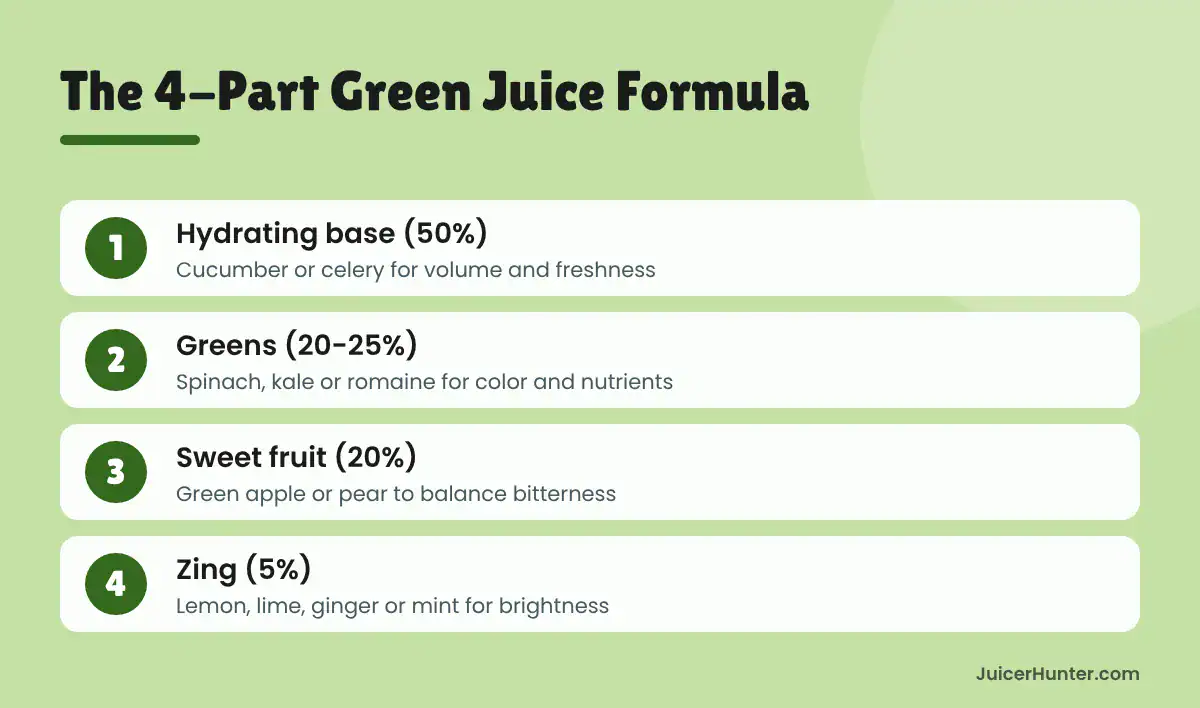
| Part | Share of the juice | Good options |
|---|---|---|
| Hydrating base | About 50% | Cucumber, celery, romaine |
| Leafy greens | 20-25% | Spinach, kale, chard, parsley |
| Sweet fruit | About 20% | Green apple, pear, pineapple, kiwi |
| Flavor boost | About 5% | Lemon, lime, ginger, mint, basil |
A good rule: if your juice tastes too bitter, add more base and fruit. If it tastes too sweet, add more cucumber and lemon.
Best Greens for Juicing (Mild to Strong)
Not all greens taste the same. Here is how they compare, from mild to bold:
- Romaine lettuce: Very mild and watery. Great for beginners.
- Baby spinach: Mild with a soft, earthy taste.
- Cucumber and celery: Not leafy, but they make green juice light and fresh.
- Swiss chard: Slightly salty and earthy.
- Kale: Stronger and a little bitter. Lacinato (dinosaur) kale is milder than curly kale. Try our kale juice recipe once you are ready.
- Parsley and cilantro: Very bold. Use a small handful.
- Dandelion and mustard greens: Very bitter. Use sparingly.
If you want a juicer that handles leafy greens well, read our guide to the best juicers for greens.
How to Make Green Juice Without a Juicer
No juicer? A blender works well too.
- Add 1/2 cup cold water to a high-speed blender.
- Add chopped cucumber, celery, spinach, apple, lemon and ginger.
- Blend on high for 45 to 60 seconds until very smooth.
- Pour the mix into a nut milk bag or fine mesh strainer set over a bowl.
- Squeeze or press with a spoon until most of the liquid is out.
- Discard the pulp or save it for soups and baking.
The blender method leaves a little more texture. If you want to skip straining, you will end up with a green smoothie, which keeps the fiber. Not sure which tool fits you? Our article on whether a blender can work as a juicer explains the trade-offs.
Green Juice Benefits: What to Expect
Fresh green juice gives you water, vitamins and plant compounds from vegetables like spinach, kale and cucumber. Leafy greens are rich in vitamin K and folate, and lemon adds vitamin C.
It is important to keep expectations realistic:
- Juice removes most of the fiber found in whole produce.
- It will not “detox” your body. Your liver and kidneys do that job.
- It works best as part of a balanced diet, not as a meal replacement.
The Mayo Clinic notes there is little evidence that juice is healthier than eating whole fruits and vegetables. Still, if a glass of green juice helps you eat more plants, that is a win. For a deeper look, see our article on green juice benefits.
The Short Version:
- Use the 50/25/20/5 formula: base, greens, fruit, zing.
- Start with mild greens like spinach and romaine.
- Peel lemons and limes to cut bitterness.
- Drink fresh juice soon after making it for the best flavor.
5 Tasty Green Juice Variations
Rotate these so your green juice never gets boring.
1. Tropical Green Juice
- 1 cucumber
- 2 cups spinach
- 1 cup pineapple chunks
- 1/2 lime
Pineapple hides the green taste almost completely. Great for kids and picky eaters.
2. Green Lemonade
- 2 cups romaine
- 1 green apple
- 1 whole lemon, peeled
- 1 small cucumber
Tart, refreshing and perfect on hot days.
3. Spicy Ginger Green Juice
- 3 celery stalks
- 2 kale leaves
- 1 pear
- 1-inch piece ginger
- 1/2 lemon
The ginger gives a warm kick that balances the kale.
4. Mint Cucumber Cooler
- 1 large cucumber
- 1 green apple
- Small handful mint
- 1/2 lime
Light and spa-like. For more ideas, see our cucumber juice recipe.
5. Weight-Loss Friendly Green Juice
Keep fruit low and add more cucumber and celery. We share a full version in our green juice recipe for weight loss.
How to Make Green Juice Taste Better
If your first glass is too strong, try these fixes:
- Add citrus. Lemon or lime instantly brightens the flavor.
- Chill your produce. Cold juice tastes less earthy.
- Use green apple or pear. They add sweetness without overpowering.
- Cut back on kale and parsley. These are the main cause of bitter juice.
- Add fresh herbs. Mint or basil make it taste fresh, not grassy.
- Serve over ice. It softens strong flavors.
How Long Does Green Juice Last?
Fresh green juice tastes best right after you make it. If you need to store it:
- Pour it into a glass jar and fill it to the top to limit air.
- Seal tightly and refrigerate right away.
- Drink within 24 hours for best flavor. Juice from a slow juicer may keep a bit longer than juice from a fast centrifugal juicer.
Homemade juice is not pasteurized. The FDA advises that children, older adults, pregnant people and anyone with a weak immune system take care with unpasteurized juice. Always wash produce well and keep juice cold.
Best Juicer for Green Juice
You can make this green juice recipe in any juicer, but some do a better job with leafy greens.
- Masticating (slow) juicers crush greens slowly and usually get more juice from spinach and kale. See our best cold press juicers list.
- Centrifugal juicers are faster and cheaper but often struggle with leafy greens. Our masticating vs centrifugal juicer guide explains the difference.
Green Juice Recipe Tips for Busy Mornings
- Prep ahead: Wash and chop produce the night before and store it in a sealed container.
- Batch twice a week: Make juice for one or two days at a time and store it in airtight jars.
- Freeze extras: Pour juice into ice cube trays and add the cubes to smoothies.
- Use the pulp: Mix it into muffins, veggie burgers or soups. Our guide on what to do with juice pulp has more ideas.
Green Juice Shopping List and Cost
Making green juice at home is cheaper when you shop smart. Here is a simple weekly list for about five 16-ounce glasses:
- 5 large cucumbers
- 1 bunch celery
- 1 large tub of baby spinach (or 2 bunches kale)
- 5 green apples
- 3 lemons
- 1 small knob of ginger
- 1 bunch mint (optional)
Prices change by season and store, but this basket usually costs far less than buying five bottles of cold-pressed green juice. A few ways to save even more:
- Buy in season. Cucumbers and greens are often cheaper in late spring and summer.
- Shop the farmers market. Ask for “juicing seconds,” which are cosmetically imperfect produce at a lower price.
- Choose organic wisely. If budget is tight, focus organic spending on leafy greens and apples, and buy conventional for thicker-skinned produce.
- Grow herbs. Mint and parsley grow easily in pots and save money every week.
Where People Go Wrong
Avoid these beginner errors and your juice will taste much better.
- Too much fruit. It tastes great, but sugar adds up quickly. Keep fruit to about one-fifth of the glass.
- Too many strong greens. A full bunch of kale or parsley can make juice taste harsh. Build up slowly.
- Not washing produce. Dirt and germs on the outside of produce can end up in your glass.
- Juicing lemon peel. The white pith and peel oils make juice bitter. Peel citrus first.
- Letting juice sit out. Fresh juice should go straight into the fridge if you are not drinking it right away.
- Using the wrong juicer for greens. A fast centrifugal juicer may spit out wet green pulp, wasting money.
Green Juice Recipe: Questions Readers Ask
What is the best green juice recipe for beginners?
A great starter green juice uses cucumber, celery, spinach, one green apple and half a lemon. It tastes fresh and mild, with just enough sweetness to balance the greens.
Can I drink green juice every day?
Many people enjoy a small glass of green juice daily as part of a balanced diet. If you take blood thinners, talk to your doctor first, because leafy greens are high in vitamin K, which can affect these medicines.
Is it better to drink green juice on an empty stomach?
There is no strong proof that timing matters much. Some people like it in the morning, while others prefer it with a meal. Pick the time that feels best for you.
Why does my green juice taste bitter?
Bitterness usually comes from too much kale, parsley or lemon pith. Use milder greens, peel your citrus and add more cucumber or green apple.
Can I make green juice in a blender?
Yes. Blend the ingredients with a little water, then strain through a nut milk bag. Skip the straining if you prefer a fiber-rich green smoothie.
Before You Go
A good green juice recipe is all about balance. Start with a hydrating base of cucumber and celery, add mild greens like spinach, sweeten with a green apple and finish with lemon or ginger. Once you have the formula down, you can mix and match your own blends.
Make your first batch this week, then try the tropical and ginger versions to find your favorite. Want more ideas? Browse our full collection of juicer recipes and find a new juice for every day of the week.