Fresh apple juice tastes nothing like the clear, sugary stuff in most bottles. It is crisp, bright and full of real apple flavor. And with this apple juice recipe, you can make it at home in minutes, whether you own a juicer or not.
Read on to learn how to make apple juice with a juicer, in a blender and on the stovetop, which apples make the best juice, how to stop it from turning brown, tasty flavor twists and how to store fresh apple juice.
Short answer: To make apple juice with a juicer, wash 3 to 4 medium apples, cut them to fit the chute, remove most of the seeds and juice them. Stir in a squeeze of lemon to slow browning and serve right away. Without a juicer, blend chopped apples with a little water and strain, or simmer quartered apples in water for 25 to 30 minutes, then mash and strain.
Jump to a section
- Why Make Homemade Apple Juice?
- Method 1: How to Make Apple Juice With a Juicer
- Method 2: How to Make Apple Juice in a Blender
- Method 3: Stovetop Apple Juice
- Best Apples for Juicing
- How to Stop Apple Juice From Turning Brown
- Tasty Apple Juice Variations
- Apple Juice Nutrition
- How to Store Fresh Apple Juice
- Fresh Apple Juice vs Apple Cider vs Store-Bought
- Using Leftover Apple Pulp
- Apple Juice for Kids
- Mistakes to Avoid
- How Many Apples Do You Need?
- Apple Picking Season Tips
- Clear vs Cloudy Apple Juice
- Hot Apple Juice for Cold Days
- Quick Apple Juice Tips
- Your Questions, Answered
- Where to Go From Here
Why Make Homemade Apple Juice?
- Fresher flavor than most store-bought juice.
- No added sugar or flavorings.
- Use any apples, including slightly bruised ones (cut out bad spots).
- Mix your own blends with ginger, carrot or cinnamon.
- Great way to use a big apple harvest or orchard haul.
Method 1: How to Make Apple Juice With a Juicer
Keep this in mind for the best apple juice recipe.
This is the fastest and freshest method.
Ingredients (Makes About 8 to 10 oz)
- 3 to 4 medium apples (about 1.5 lb)
- Squeeze of lemon juice (optional, helps prevent browning)
Instructions
- Wash the apples well under running water.
- Cut them into pieces that fit your juicer chute. Wide-chute juicers can often take halves or even small whole apples.
- Core if you like. Many people juice the core, but removing seeds is a good habit. Apple seeds contain a compound that can release small amounts of cyanide when crushed. A few seeds are not a concern for most people, but there is no need to juice them.
- Juice the apples. Feed them steadily through the juicer.
- Add lemon. Stir in a squeeze of lemon to keep the color bright.
- Serve right away over ice.
Both centrifugal and masticating juicers work great with apples. Learn more in our electric juicer guide.
Method 2: How to Make Apple Juice in a Blender
Small details like these make a apple juice recipe shine.
No juicer? No problem.
Ingredients
- 4 medium apples, cored and chopped
- 1/2 to 1 cup cold water
- Squeeze of lemon
Instructions
- Add the apples, water and lemon to a blender.
- Blend on high for 45 to 60 seconds until very smooth.
- Pour into a nut milk bag or fine mesh strainer over a bowl.
- Squeeze or press until you get all the juice.
- Serve chilled.
The blender method makes a slightly cloudier juice. Our guide on how to juice without a juicer has more tips.
Method 3: Stovetop Apple Juice
This method makes a mellow, cooked juice. It is great for big batches.
Ingredients (Makes About 8 Cups)
- 10 to 12 medium apples, quartered (no need to peel or core)
- Water to just cover the apples (about 8 to 10 cups)
- Optional: 2 cinnamon sticks, 1 to 2 tbsp sugar or honey
Instructions
- Place apples in a large pot and cover with water.
- Add cinnamon if using.
- Bring to a boil, then simmer uncovered for about 25 to 30 minutes until the apples are very soft.
- Mash the apples gently.
- Strain through a fine mesh strainer lined with cheesecloth.
- Sweeten to taste and chill.
You can also use a steam juicer for big batches of clear apple juice.
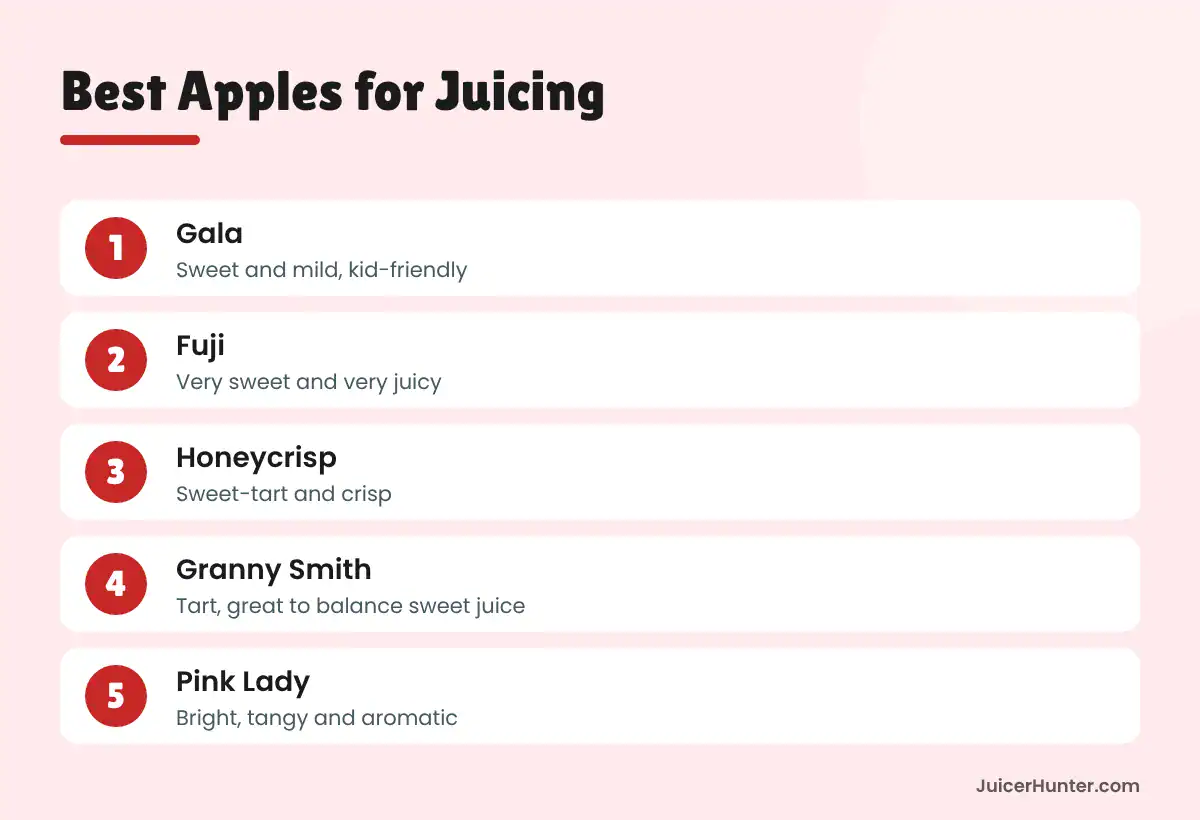
Best Apples for Juicing
| Apple | Flavor | Juiciness | Best for |
|---|---|---|---|
| Gala | Sweet, mild | High | Kid-friendly juice |
| Fuji | Very sweet | Very high | Sweet juice |
| Honeycrisp | Sweet-tart | Very high | Balanced juice |
| Granny Smith | Tart | High | Green juices, balancing sweetness |
| Pink Lady | Tangy, aromatic | High | Bright, complex juice |
| McIntosh | Soft, tangy | Medium | Stovetop juice and cider-style blends |
| Golden Delicious | Sweet, honeyed | High | Mellow juice |
Pro tip: Mix 2 sweet apples with 1 tart apple for a juice that is balanced and refreshing.
How to Stop Apple Juice From Turning Brown
Fresh apple juice browns quickly because of oxidation. Here is how to slow it down:
- Add lemon juice. A teaspoon per glass helps a lot.
- Drink it right away.
- Use a slow juicer, which adds less air.
- Store it in a full, airtight jar so there is little air.
- Chill it immediately.
Browning is natural and safe. It changes the color and flavor a bit, but the juice is still fine to drink.
Cheat Sheet
- You need about 3 to 4 medium apples per 8 to 10 oz of juice.
- Mix sweet and tart apples for the best flavor.
- Add lemon to keep apple juice from browning.
- No juicer? Use a blender and strainer or the stovetop method.
Tasty Apple Juice Variations
Apple Ginger Juice
Add a 1/2-inch piece of ginger. Spicy and warming.
Apple Carrot Juice
3 carrots and 2 apples. One of the most popular juice blends ever.
Apple Celery Juice
2 apples and 3 celery stalks. Light, crisp and refreshing.
Apple Cinnamon Juice
Stir a pinch of ground cinnamon into fresh apple juice, or simmer with cinnamon sticks on the stovetop.
Apple Pear Juice
2 apples and 1 ripe pear. Smooth and mellow.
Green Apple Juice
Use Granny Smith apples with a handful of spinach and lemon. We also have a green apple juice recipe.
Apple Beet Carrot (ABC) Juice
A classic blend: 1 apple, 1 small beet and 2 carrots. Earthy, sweet and bright red.
Apple Juice Nutrition
Fresh apple juice provides vitamin C (especially with a splash of lemon), potassium and plant compounds called polyphenols. You can check detailed nutrition data in USDA FoodData Central.
Apple juice is also naturally high in sugar and low in fiber, since juicing removes most of the fiber. The Dietary Guidelines for Americans recommend that most fruit come from whole fruit. Enjoy fresh apple juice in moderation, or mix it with vegetables like celery, cucumber and carrots.
Curious about other apple juice questions? Read does apple juice make you poop and our guide to substitutes for apple juice.
How to Store Fresh Apple Juice
- Fridge: Store in a sealed glass jar, filled to the top, for 2 to 3 days (raw juice) or up to 5 to 7 days (stovetop juice).
- Freezer: Freeze for up to 6 months. Leave room for expansion.
- Canning: Follow tested methods from the National Center for Home Food Preservation for shelf-stable juice.
For bottled apple juice, read how long apple juice is good for after opening.
Fresh Apple Juice vs Apple Cider vs Store-Bought
| Type | What it is | Taste | Processing |
|---|---|---|---|
| Fresh apple juice | Juiced apples, filtered or not | Bright, fresh | Usually none |
| Apple cider (U.S.) | Raw, unfiltered pressed apple juice | Cloudy, rich | Often unpasteurized or lightly pasteurized |
| Store-bought apple juice | Filtered, pasteurized juice | Sweet, clear | Pasteurized, sometimes from concentrate |
Raw juice and cider are not pasteurized. The FDA advises extra care for children, older adults, pregnant people and people with weakened immune systems.
Using Leftover Apple Pulp
Apple pulp is full of fiber and flavor. Try these ideas:
- Stir into oatmeal or pancake batter.
- Bake into muffins, apple bread or granola bars.
- Make fruit leather by blending pulp with a little juice and drying it in a low oven.
- Mix into compost.
Read more in our guide on what to do with juice pulp.
Apple Juice for Kids
Kids love homemade apple juice. Here are tips for serving it:
- Serve small portions, about 4 ounces.
- Dilute with water for younger kids.
- Mix in vegetables like carrots or cucumber for a nutrition boost.
- Serve with a meal rather than all day.
- Wondering about babies? Read our guide on when babies can have juice.
Mistakes to Avoid
- Using only sweet apples. The juice can taste flat. Add a tart apple.
- Skipping the lemon. Your juice will brown fast.
- Juicing soft, mealy apples. They give less juice and a mushy texture.
- Not washing apples. Wash off dirt and residue before juicing.
- Making too much ahead. Raw apple juice is best fresh.
How Many Apples Do You Need?
| Juice amount | Medium apples needed | Approx. weight |
|---|---|---|
| 1 glass (8 to 10 oz) | 3 to 4 | 1.5 lb |
| 1 quart (32 oz) | 12 to 16 | 6 lb |
| 1 gallon (128 oz) | 45 to 60 | 22 to 25 lb |
Juicy apples like Fuji and Honeycrisp give more juice than drier apples like Red Delicious.
Apple Picking Season Tips
Fall is the best time to make apple juice. In much of the U.S., apple season runs from late August through October or November.
- Visit a local orchard for fresh, cheap apples. Ask about “seconds” or “juice apples,” which are cosmetically imperfect but perfect for juicing.
- Mix varieties from the orchard for complex flavor.
- Store apples cold. Keep them in the fridge or a cool garage to stay crisp for weeks.
- Juice bruised apples first, after cutting out any bad spots.
Clear vs Cloudy Apple Juice
- Cloudy apple juice is fresh juice with fine particles of apple. It has more body and a fuller flavor. Most homemade juice is cloudy.
- Clear apple juice has been filtered to remove those particles. To make it at home, let the juice settle in the fridge for a few hours, then carefully pour off the clear juice, or strain it through a coffee filter or cheesecloth.
Both are delicious. Cloudy juice tastes more like fresh apples, while clear juice looks like the bottled kind.
Hot Apple Juice for Cold Days
Turn fresh apple juice into a cozy warm drink:
- Pour 2 cups of apple juice into a small pot.
- Add a cinnamon stick, 2 whole cloves and a strip of orange peel.
- Warm over low heat for 10 minutes. Do not boil.
- Strain into mugs and add a thin apple slice on top.
This is a family-friendly drink that makes the whole kitchen smell amazing.
Quick Apple Juice Tips
- Mix sweet and tart apples for balanced flavor.
- Add lemon to stop browning.
- Chill apples before juicing for cold, crisp juice.
- Skim foam from centrifugal juice with a spoon.
Your Questions, Answered
How many apples does it take to make a cup of juice?
You need about 3 to 4 medium apples for 8 to 10 ounces of fresh apple juice. Very juicy apples like Fuji may need fewer.
Do you need to peel apples before juicing?
No. Wash them well and juice them with the skin on. The skin adds color and some nutrients.
Can I juice apples with seeds?
It is best to remove most seeds. Crushed apple seeds contain amygdalin, which can release small amounts of cyanide. A few seeds are not a problem for most people, but there is no benefit to juicing them.
How do you make apple juice without a juicer?
Blend chopped apples with a little water, then strain the mixture through a nut milk bag. You can also simmer apples in water and strain them.
How long does homemade apple juice last?
Raw apple juice keeps for 2 to 3 days in the fridge. Cooked stovetop juice lasts about 5 to 7 days.
Why does my apple juice turn brown?
Apple juice browns when it is exposed to air. Add lemon juice, drink it right away and store it in a full, airtight container.
Where to Go From Here
This homemade apple juice recipe is easy, flexible and much fresher than store-bought juice. Use a juicer for the brightest flavor, a blender if you do not have a juicer, or the stovetop for big batches. Mix sweet and tart apples, add a splash of lemon and drink it fresh.
Try the apple ginger or apple carrot variation next. For more ideas, explore our juicer recipes or pair your apples with our cranberry juice recipe.