Reader-supported: we may earn a commission if you buy through links on this page, at no extra cost to you. Learn more · How we choose products
Walk into any juice bar and you will see bottles labeled “cold-pressed.” The same idea is now available at home with a cold press juicer machine. These juicers promise smooth, vibrant juice with less foam and better yield, especially from leafy greens.
But what exactly is a cold press juicer, and is it worth the higher price? This post covers what a cold press juicer machine is, how it works, how it compares with a centrifugal juicer, the real benefits and drawbacks, and the key features to compare before you buy.
A cold press juicer is a juicer that slowly crushes and presses fruits and vegetables to extract juice. Instead of a fast-spinning blade, it uses a slow-turning auger or a press plate.
The term “cold press” comes from the low heat created during juicing. The motor turns slowly, so there is very little friction and the juice stays close to room temperature.
At home, most cold press juicer machines are masticating juicers (also called slow juicers). Learn more about how they chew and press produce in our masticating juicer guide.
In commercial juice bars, “cold-pressed” often means a two-step process: produce is ground, packed in bags and pressed with a hydraulic press. Some bottled juices are also treated with high-pressure processing (HPP) to extend shelf life.
How Does a Cold Press Juicer Machine Work?
Most home cold press juicers follow these steps:
Feeding: You place produce in the chute or hopper.
Crushing: A slow auger, often turning at 40 to 100 RPM, grabs and crushes it.
Pressing: The auger squeezes the crushed produce against a fine mesh screen.
Separation: Juice flows through the screen and out the spout. Dry pulp exits from a separate outlet.
Some machines use two gears (twin-gear juicers) instead of one auger. A few premium home models use a press bag system similar to commercial machines.
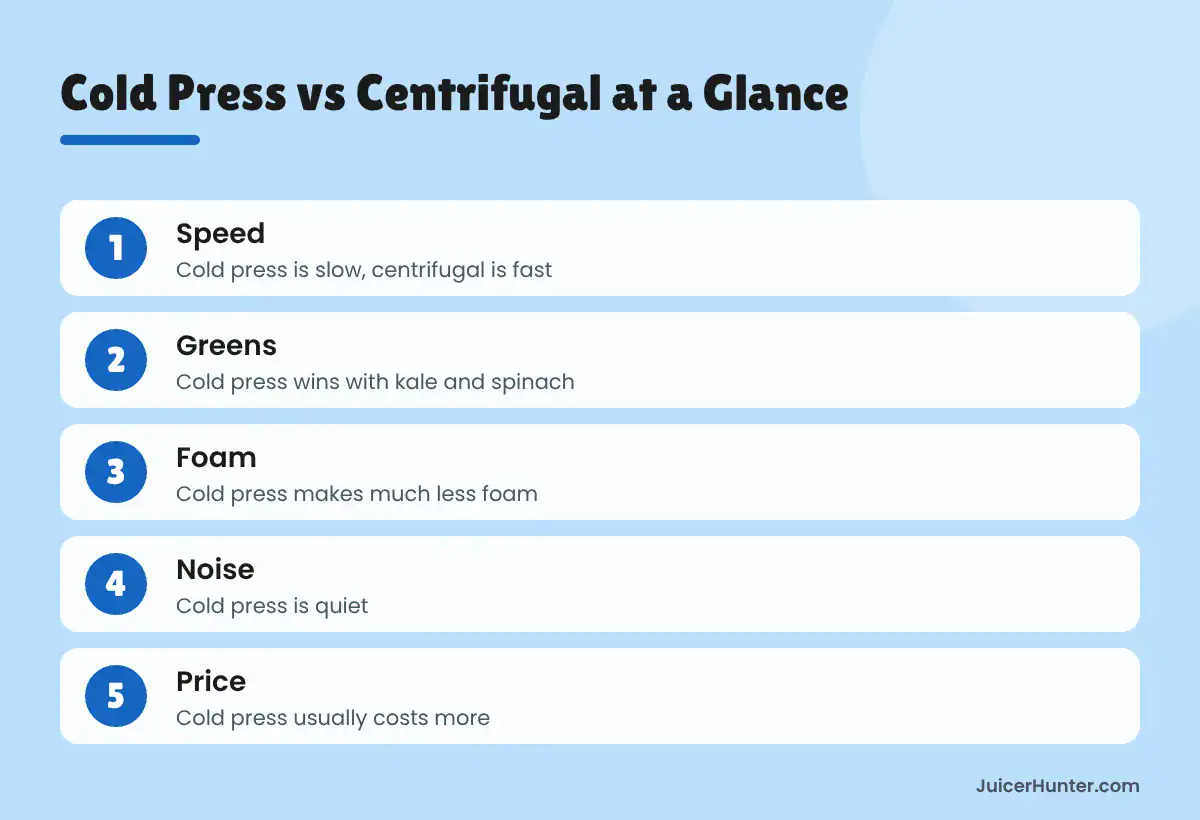
Cold Press vs Centrifugal Juicer
The main trade-offs between cold press and centrifugal juicers.
A cold press juicer squeezes leafy greens, herbs and wheatgrass much better than a fast juicer. You get more juice from the same bunch of kale.
Smooth, Low-Foam Juice
Slow pressing mixes less air into your juice, so it looks and tastes smoother.
Juice Stays Fresh a Little Longer
Less air often means slower separation and oxidation. Many people find cold press juice keeps a bit better in the fridge, though fresh juice is still best within a day or two.
Quiet Operation
Low-speed motors are much quieter than high-speed centrifugal motors.
Versatility
Many cold press machines can also make nut milk, sorbet, baby food and more, depending on the model.
Does Cold Press Juice Have More Nutrients?
You will often hear that cold press juice keeps more nutrients because it creates less heat. The idea makes sense, since some nutrients like vitamin C can break down with heat and air. However, home juicers do not get very hot, and strong scientific evidence comparing nutrient levels is limited.
The most important factors are:
Using fresh, ripe produce.
Drinking juice soon after you make it.
Storing leftovers cold and sealed.
Also remember that juice removes much of the fiber found in whole produce. The Mayo Clinic notes that whole fruits and vegetables provide fiber that juice lacks.
Remember This
A cold press juicer machine crushes and presses produce slowly.
It gives better yields from greens and makes smooth, low-foam juice.
It is slower, pricier and has more parts than a centrifugal juicer.
Freshness matters more than the juicer for nutrition.
Drawbacks of Cold Press Juicers
Slower: A large glass can take several minutes.
More prep: Narrow-chute models need produce cut into small pieces.
More cleaning: Screens and augers need brushing.
Higher price: Quality models cost more up front.
Fibrous produce can wrap: Cut celery and ginger into short pieces.
Types of Cold Press Juicer Machines
Vertical Slow Juicers
Compact, tall machines with gravity feeding. Great for mixed fruit and veggie juice. Many have wide chutes for whole apples. Examples on our site include the Nama J2, Ninja cold press juicer and several Kuvings models.
Horizontal Slow Juicers
Low, long machines that excel at leafy greens and wheatgrass. Often double as nut butter makers and pasta extruders. See our Omega J8006HDS review.
Twin-Gear Juicers
Two gears crush produce very finely for high yields. They are usually heavier and pricier. Learn more in our Tribest Greenstar Pro review.
Press-Style Home Juicers
These use a grinding step and a separate press, similar to commercial cold press. They offer excellent yields but cost the most.
How to Choose a Cold Press Juicer Machine
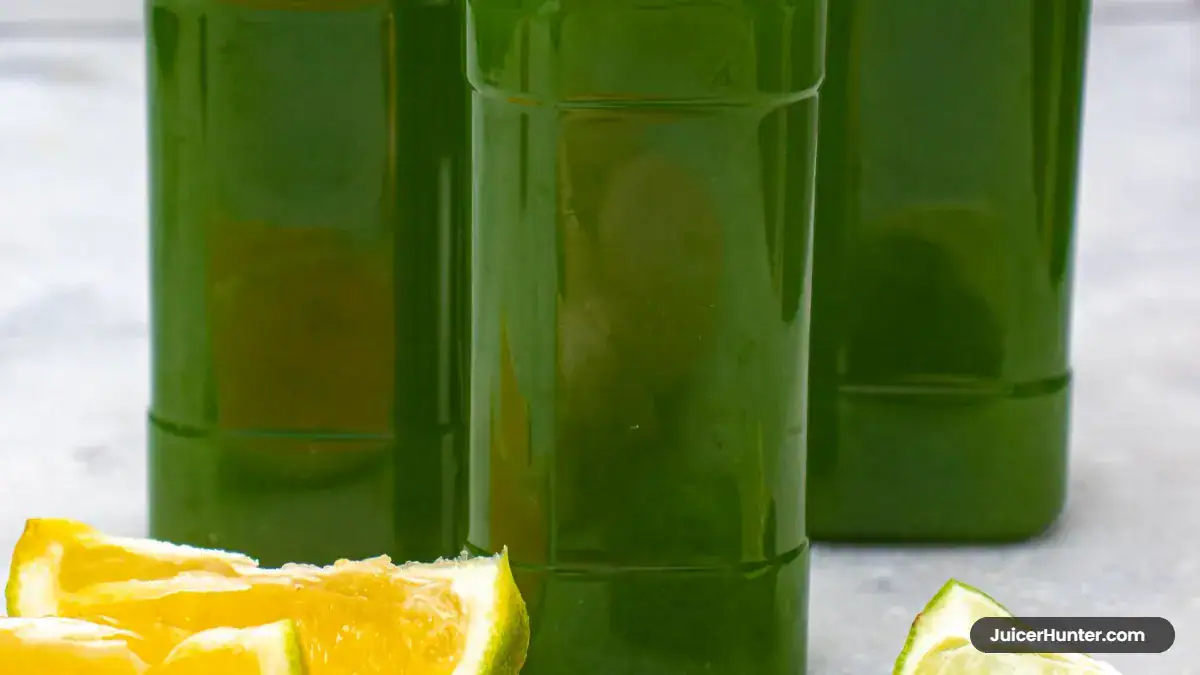
Cold pressed juice is smooth and low in foam.
1. What Will You Juice Most?
Mostly greens: horizontal or twin-gear.
Mixed fruit and veggies: vertical.
Whole apples and big batches: wide-chute vertical.
2. Chute Size
Wide chutes (around 3 inches or more) save prep time. Narrow chutes need more chopping but can handle greens well.
3. Batch Size
Some models have large hoppers that let you load produce and walk away. Great for big batches.
4. Cleaning
Look for fewer parts, rotating brushes that clean the screen while juicing, and dishwasher-safe parts.
5. Warranty
Quality cold press juicers often come with long motor warranties. A strong warranty is a good sign of build quality.
There is a lot of marketing around cold press juice. Here is what holds up.
Myth
Fact
Cold press juice detoxes your body.
Your liver and kidneys handle detox. Juice can be part of a healthy diet, but it does not “cleanse” your organs.
Cold press juice keeps for weeks.
Homemade cold press juice is best within 1 to 2 days. Long shelf life in stores usually comes from HPP treatment.
Any slow juicer is a cold press juicer.
Most slow juicers are called cold press at home, but commercial cold press often uses a hydraulic press.
Cold press juicers cannot juice hard produce.
Most handle carrots, beets and apples very well. Just cut them to fit the chute.
Juice can replace vegetables.
Juice lacks most fiber. Keep eating whole fruits and veggies too.
Home Cold Press vs Store-Bought Cold Pressed Juice
Should you buy a machine or keep buying bottles? Here is how they compare.
Factor
Homemade cold press
Store-bought cold pressed
Cost per bottle
Lower over time
Often several dollars each
Freshness
Fresh as you make it
May be days or weeks old
Shelf life
1 to 2 days
Longer if HPP-treated
Ingredients
Fully in your control
Fixed recipes
Convenience
Takes time to make and clean
Grab and go
Packaging waste
Reusable bottles
Single-use bottles
If you drink cold pressed juice several times a week, a home cold press juicer machine usually saves money over time. It also lets you try any recipe you like, from a mild green juice recipe to spicy ginger shots.
Who Should Buy a Cold Press Juicer Machine?
A cold press juicer is a great fit if you:
Drink green juice several times a week.
Want to juice wheatgrass, herbs or sprouts.
Want quiet juicing early in the morning.
Prefer smooth juice without foam.
Like making nut milk or frozen fruit desserts too.
It may not be the best fit if you need juice in under two minutes every morning or only juice hard produce now and then. In that case, an electric juicer with a centrifugal design may suit you better.
Cold Press Juicer Maintenance Tips
A cold press juicer machine is an investment, so keep it in good shape.
Clean right after use. Pulp dries fast and clogs the screen.
Brush the screen with the included brush, both inside and out.
Soak the screen weekly in warm soapy water to clear tiny holes.
Remove stains from carrots and beets with a paste of baking soda and water.
Check seals and wipers every few months and replace them if they wear out.
Store it dry and assembled so you do not lose small parts.
Never immerse the motor base. Wipe it with a damp cloth.
How Long Does Cold Pressed Juice Last?
Homemade cold pressed juice is best within 24 to 48 hours. Store it in full, airtight glass bottles in the fridge. Learn more in our post on how long cold pressed juice lasts.
Store-bought cold-pressed juice may last longer because of HPP treatment. Homemade juice is not pasteurized or HPP-treated, so the FDA advises extra care for children, older adults, pregnant people and those with weak immune systems.
Quick Questions and Answers
What is a cold press juicer?
A cold press juicer is a juicer that slowly crushes and presses produce to extract juice. It creates little heat and foam, and it works especially well with leafy greens.
Is a cold press juicer the same as a masticating juicer?
At home, yes. Most cold press juicers are masticating, or slow, juicers that use an auger. Commercial cold press can also mean a hydraulic press system.
Is a cold press juicer machine worth it?
It is worth it if you juice often, love green juice or want higher yields. If you only juice apples and carrots now and then, a centrifugal juicer may be enough.
Is cold pressed juice healthier?
Cold press juice has less foam and may keep a bit better, but strong evidence of a big nutrient difference is limited. Drinking fresh juice quickly matters most.
The Bottom Line
A cold press juicer machine is a smart choice if you want smooth, low-foam juice and the best yield from leafy greens. It is slower and pricier than a centrifugal juicer, but many juice lovers think the quality is worth it.
Decide what you will juice most, then compare chute size, cleaning, warranty and budget.
From here, See our list of the best cold press juicers and find the one that fits your kitchen.