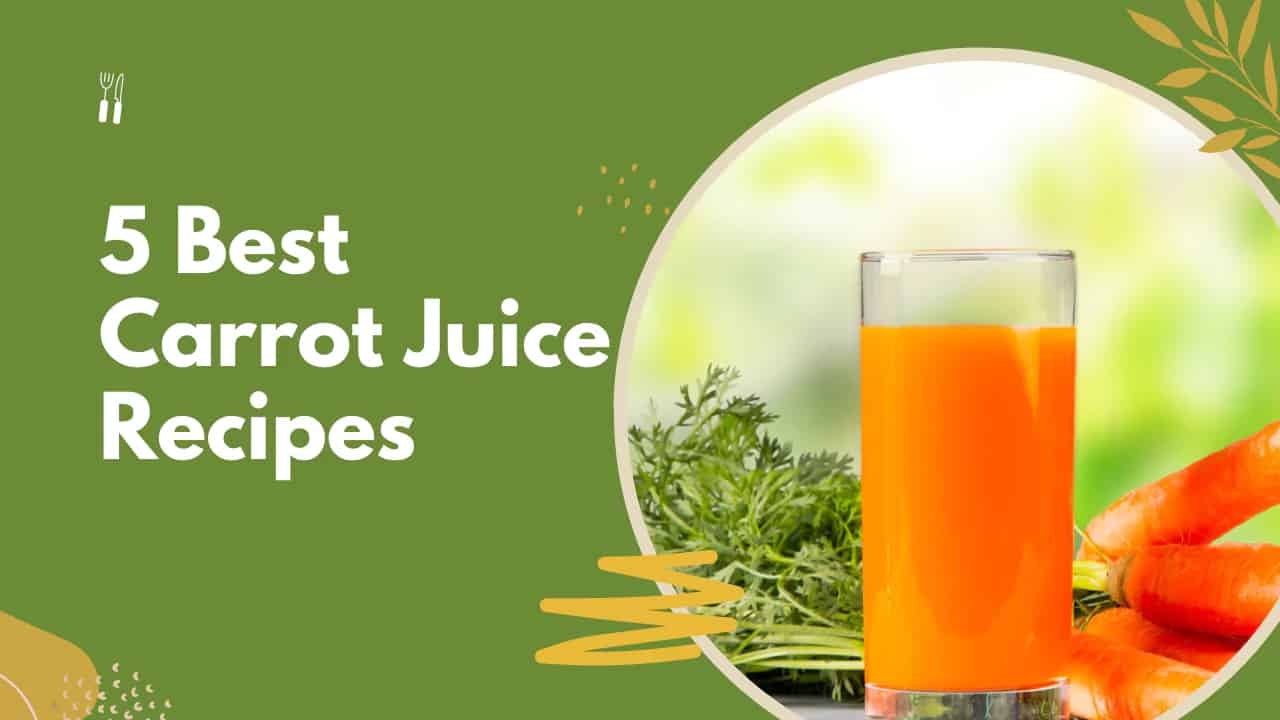
Carrot juice is sweet, earthy and one of the best juices for beginners, because carrots juice easily and pair with almost everything. Below are 5 tested-ratio carrot juice recipes, how to make carrot juice with or without a juicer, how many carrots you need and what a glass actually gives you nutritionally.
Quick answer: About 1 lb (450 g, roughly 6–7 medium) carrots makes 1 cup (240 ml) of juice in a slow juicer. For the classic recipe, juice 6 carrots with 1 apple and a small piece of ginger. No juicer? Blend chopped carrots with 1 cup of water and strain through a nut-milk bag.

5 Best Carrot Juice Recipes
| Recipe | Ingredients (1 serving) | Taste |
|---|---|---|
| 1. Classic carrot apple ginger | 6 carrots, 1 apple, 1 cm ginger | Sweet, warming |
| 2. Carrot orange | 5 carrots, 2 peeled oranges | Bright, citrusy |
| 3. Carrot beet | 4 carrots, 1 small beet, ½ lemon | Earthy, deep red |
| 4. Carrot turmeric | 6 carrots, 2 cm fresh turmeric, ½ lemon, pinch of black pepper | Spicy, golden |
| 5. Green carrot | 4 carrots, 2 celery stalks, 1 cucumber, handful of spinach | Fresh, lower sugar |
1. Classic carrot apple ginger juice
The best starter recipe. The apple adds sweetness and the ginger adds a little heat. See how to juice ginger if you have not juiced it before.
2. Carrot orange juice
Peel the oranges, leaving some white pith for extra flavor. This is the most kid-friendly version. Our guide on oranges for juicing helps you pick the juiciest varieties.
3. Carrot beet juice
Start with a small beet: beet juice is strong and can turn urine pink (harmless). Read more in beet and carrot juice benefits.
4. Carrot turmeric juice
Fresh turmeric stains, so wear gloves and rinse your juicer straight away. A full version is in our carrot ginger turmeric juice recipe.
5. Green carrot juice
Celery and cucumber add volume with very little sugar, making this the lightest option. For more, see how to make celery juice.
How to Make Carrot Juice
With a juicer
- Scrub the carrots well. Peeling is optional; trim the green tops.
- Cut them to fit the chute. Thin carrots can go in whole.
- Juice the carrots, alternating with softer ingredients like apple or orange.
- Stir and drink straight away, or chill for up to 48 hours.
A masticating juicer gives more juice from hard carrots and less foam than a centrifugal juicer, but a centrifugal model is faster. Compare them in masticating vs centrifugal juicer.
Without a juicer (blender method)
- Chop 1 lb (450 g) carrots into 2 cm pieces.
- Blend with 1 cup (240 ml) cold water for 60–90 seconds until very fine.
- Pour into a nut-milk bag or cheesecloth over a bowl and squeeze hard.
- You will get about 1½ cups of slightly diluted juice. More tips: how to juice without a juicer.
How Many Carrots for a Glass of Juice?
| Carrots | Approx. weight | Juice yield (slow juicer) |
|---|---|---|
| 3 medium | 200 g | About ½ cup (120 ml) |
| 6–7 medium | 450 g (1 lb) | About 1 cup (240 ml) |
| 13–14 medium | 900 g (2 lb) | About 2 cups (480 ml) |
Carrot Juice Nutrition
One cup (240 ml) of carrot juice has about 95 kcal and roughly 9 g of natural sugar. It is one of the richest sources of beta-carotene, which your body turns into vitamin A: a cup provides well over 200% of the daily value for vitamin A (USDA FoodData Central, carrot juice). It also provides potassium and vitamin K. Juicing removes most of the fiber.
Benefits: What Carrot Juice Can Do
- Vitamin A for eyes, skin and immunity: vitamin A is essential for normal vision in low light and for healthy skin and immune function (NIH ODS). Carrot juice will not give you better-than-normal eyesight, but it helps prevent deficiency.
- Potassium: supports normal blood pressure as part of a balanced diet.
- Easy vegetable serving: a convenient way to add vegetables if you rarely eat them.
Who Should Be Careful
- Orange skin (carotenemia): drinking large amounts every day can turn your palms and soles yellow-orange. It is harmless and fades when you cut back.
- Blood sugar: carrot juice has more sugar and less fiber than whole carrots; people with diabetes should keep servings small.
- Babies: do not give homemade carrot juice to infants; ask your pediatrician. See when can babies have juice.
Storage
Fresh carrot juice is best within 24 hours and keeps up to 48 hours in a full, airtight glass jar in the fridge. Add a squeeze of lemon to slow browning. Freeze for up to 3 months. More detail in how long does a fresh juice last.
Kuvings Whole Slow Juicer B6000S
Best for: fresh, nutrient-rich juice from fruits, veggies and leafy greens.
- Slow masticating design keeps juice smooth
- Wide chute fits whole apples
- Also makes smoothies and sorbets
Want more options? See our best masticating juicers and best juicers guides.
As an Amazon Associate, Juicer Hunter earns from qualifying purchases.
Frequently Asked Questions
Should I peel carrots before juicing?
No. Scrubbing well is enough. Peel only if the carrots are not organic and you prefer to, or if the skin is damaged.
Is it OK to drink carrot juice every day?
Yes, a small glass (120–240 ml) a day is fine for most healthy adults. Very large daily amounts can cause harmless orange skin.
What fruits go well with carrot juice?
Apple, orange, pineapple, lemon and mango all pair well. Ginger and turmeric add spice.
Can I juice carrots in a blender?
Yes. Blend chopped carrots with water and strain through a nut-milk bag.