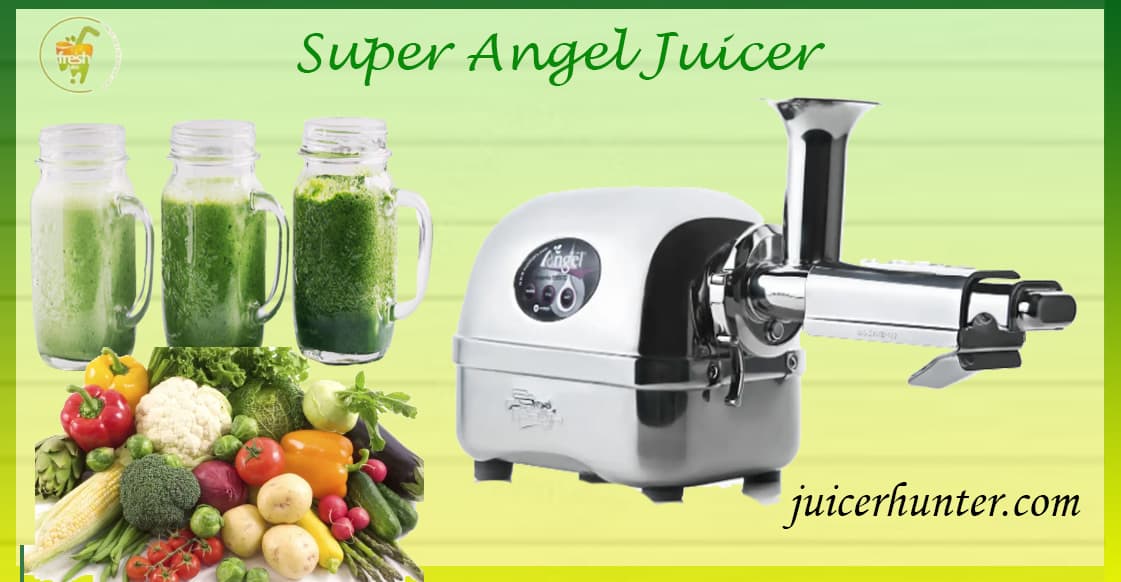
Angel juicers are premium twin-gear juicers known for stainless steel construction, very high yields from leafy greens and long working lives. They are also among the most expensive home juicers. These are the most common questions buyers ask, answered clearly.
Quick answers: Angel juicers are made in South Korea. They are twin-gear (triturating) slow juicers running at about 82 RPM, with stainless steel gears and body. They are expensive because of their all-steel construction and design, and with care they can last many years. Clean them right after use and descale with diluted vinegar or citric acid.

Where Are Angel Juicers Made?
Angel juicers are designed and manufactured in South Korea.
What Kind of Juicer Is the Angel?
The Angel is a twin-gear (triturating) juicer: two interlocking stainless steel gears turn slowly, about 82 RPM, crushing and pressing produce. This design is especially efficient with leafy greens, wheatgrass and hard vegetables. Read more in twin gear juicers and what is an auger?.
Is the Angel Juicer the Best?
For dry pulp and maximum yield from greens, Angel juicers are among the best home juicers. They are less convenient than vertical slow juicers: the chute is small, prep takes longer, and soft fruit can be tricky. If you mostly juice fruit or want speed, a vertical or centrifugal juicer may suit you better. Compare options in best juicers reviewed and our Angel juicer review.
| Angel (twin gear) | Vertical slow juicer | Centrifugal | |
|---|---|---|---|
| Yield on greens | Excellent | Good | Fair |
| Speed | Slow | Medium | Fast |
| Prep | More cutting | Less (wide-chute models) | Least |
| Build | Stainless steel | Mostly plastic | Mostly plastic |
| Price | High | Mid | Low to mid |
How Long Do Angel Juicers Last?
With regular cleaning, Angel juicers are known for lasting many years, often more than a decade, thanks to their stainless steel gears and body. Warranty terms depend on the model, country and seller, so confirm the warranty with an authorized dealer before buying.
Why Are Angel Juicers So Expensive?
- Stainless steel twin gears, screen and housing instead of plastic
- Precision gear design for high yield and dry pulp
- Low production volumes and import costs
- Long expected lifespan
How to Choose an Angel Juicer
- Compare current models (for example Angel 5500, 7500 and 8500S) for chute design, accessories and price.
- Buy from an authorized dealer to protect your warranty.
- Check that replacement parts are available in your country.
- Be realistic about prep time: twin-gear juicers reward patience.

How to Clean an Angel Juicer
- Unplug the juicer and remove the gear housing, gears and screen.
- Rinse each part under warm running water straight after juicing.
- Scrub the screen with the included brush, from the inside out.
- Dry fully before reassembling to protect the steel finish.
How to Remove Mineral Deposits
Hard water and produce minerals can leave a white film on stainless steel parts. Soak the parts for 20–30 minutes in warm water with a little white vinegar (about 1 part vinegar to 3 parts water) or a citric acid solution, then scrub gently and rinse well. Avoid bleach and abrasive pads. See how to wash a juicer.
Frequently Asked Questions
Does vinegar remove mineral deposits from an Angel juicer?
Yes. A diluted vinegar soak loosens mineral film on stainless steel parts. Rinse thoroughly afterwards.
Can the Angel juicer make nut butter or baby food?
Angel juicers are designed mainly for juice. Check your model’s manual before using it for other foods.
Is the Angel juicer good for wheatgrass?
Yes. Twin-gear juicers like the Angel are among the best for wheatgrass.
What RPM does the Angel juicer run at?
About 82 RPM.