You can make fresh tomato juice in a blender in about 15 minutes, no juicer required. Homemade tomato juice tastes brighter than canned, and you control the salt, which is the biggest drawback of most store-bought versions. Here is the recipe, the best tomatoes to use, raw vs cooked methods and how long it keeps.
Quick answer: Core and quarter 2 lb (900 g) ripe tomatoes, blend for 60 seconds, then strain through a fine sieve. Season with ½ teaspoon salt, 1 teaspoon lemon juice and a pinch of pepper. Makes about 3 cups. For a smoother, sweeter juice, simmer the blended tomatoes for 10 minutes before straining.
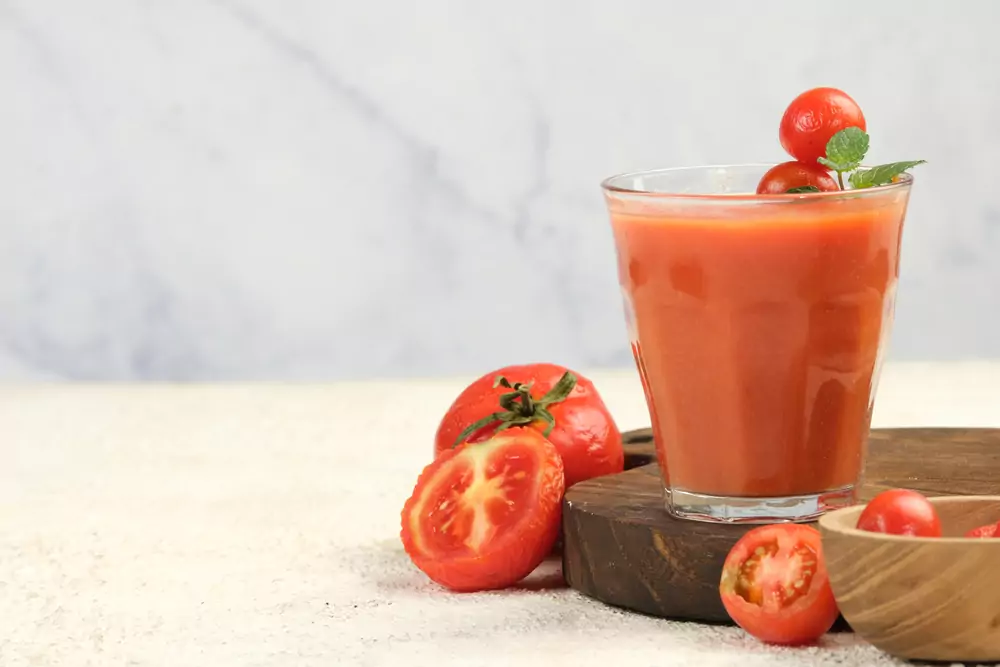
Tomato Juice Recipe (Blender Method)
| Prep time | 10 minutes |
| Cook time (optional) | 10 minutes |
| Equipment | Blender, fine-mesh strainer |
| Yield | About 3 cups (720 ml), 3 servings |
Ingredients
- 2 lb (900 g) ripe tomatoes (about 6 medium)
- ½ celery stalk (optional, for classic flavor)
- 1 teaspoon lemon juice
- ½ teaspoon salt (or to taste)
- Pinch of black pepper
- Optional: a dash of Worcestershire or hot sauce
Instructions
- Wash the tomatoes, cut out the cores and quarter them.
- Blend the tomatoes (and celery) on high for about 60 seconds until completely smooth.
- Optional cooked method: pour into a pot and simmer for 10 minutes, stirring. This deepens the flavor and makes the juice smoother.
- Strain through a fine-mesh sieve, pressing the pulp with a spoon. Discard the skins and seeds.
- Stir in the lemon juice, salt and pepper. Chill for at least 1 hour and serve cold.

Raw vs Cooked Tomato Juice
| Raw | Cooked (simmered) | |
|---|---|---|
| Flavor | Fresh, light, slightly foamy | Rich, sweeter, classic “canned” taste |
| Texture | Thinner; separates faster | Thicker and smoother |
| Vitamin C | Higher | Lower (heat reduces it) |
| Lycopene | Present | More available to your body after heating |
Best Tomatoes for Juice

- Roma / plum: meaty with fewer seeds; thicker juice.
- Beefsteak: very juicy, classic flavor.
- Heirloom: most flavorful, but mix colors carefully (yellow tomatoes make yellow juice).
- Cherry tomatoes: sweet; great in small batches. See cherry tomato recipes.
- Use the ripest, deepest-red tomatoes you can find; out-of-season tomatoes make bland juice.
Tomato Juice Nutrition
| Per 1 cup (240 ml) | Homemade, lightly salted | Canned, regular |
|---|---|---|
| Calories | About 40 kcal | About 40 kcal |
| Sodium | About 300 mg (with ½ tsp salt for 3 cups) | About 600+ mg |
| Vitamin C | About 40–50% DV | About 40–70% DV |
| Potassium | About 500 mg | About 530 mg |
For more numbers see tomato juice calories and carbs in tomato juice.
Benefits
- Lycopene: tomatoes are the main dietary source of this red carotenoid, which is studied for heart and prostate health. Your body absorbs more lycopene from heated tomatoes eaten with a little fat.
- Low calorie: one of the lowest-calorie juices.
- Potassium and vitamin C in every glass.
- Control the salt: homemade juice can have half the sodium of regular canned juice.

How to Store Tomato Juice
- Fridge: in a sealed glass jar for 3–5 days. Shake before serving; it separates naturally.
- Freezer: up to 6 months; leave room for expansion.
- Signs it has gone bad: sour or fizzy smell, bubbles, mold, or a bulging lid. Throw it out.
Variations
- Spicy: add hot sauce and horseradish, or see spicy tomato juice.
- Vegetable juice: blend with carrot, celery and bell pepper for a homemade V8-style juice. Read is V8 juice good for your kidneys?.
- Herb: add basil leaves before blending.

Our top smoothie blender picks
| Best Overall | Vitamix Propel Series 750 | Check Price |
| Best Value | Ninja BL660 Professional | Check Price |
| Best Personal | Ninja Fit QB3001SS | Check Price |
Full reviews: best blenders for smoothies.
As an Amazon Associate, Juicer Hunter earns from qualifying purchases.

Rebecca Wojcik
Rebecca Wojcik, a highly skilled and accomplished nutrition expert, is an experienced Registered Dietitian Nutritionist, Registered Yoga Teacher (200 hr), and successful female entrepreneur.
Frequently Asked Questions
Do I need to peel tomatoes for juice?
No. Straining removes the skins and seeds.
Can I make tomato juice without a blender?
Yes. Grate the tomatoes on a box grater, then strain. Or cook chopped tomatoes until soft and push them through a sieve.
Can I use a juicer for tomatoes?
Yes. A slow juicer works well and needs no straining.
How long does homemade tomato juice last?
About 3–5 days in the fridge or up to 6 months frozen.