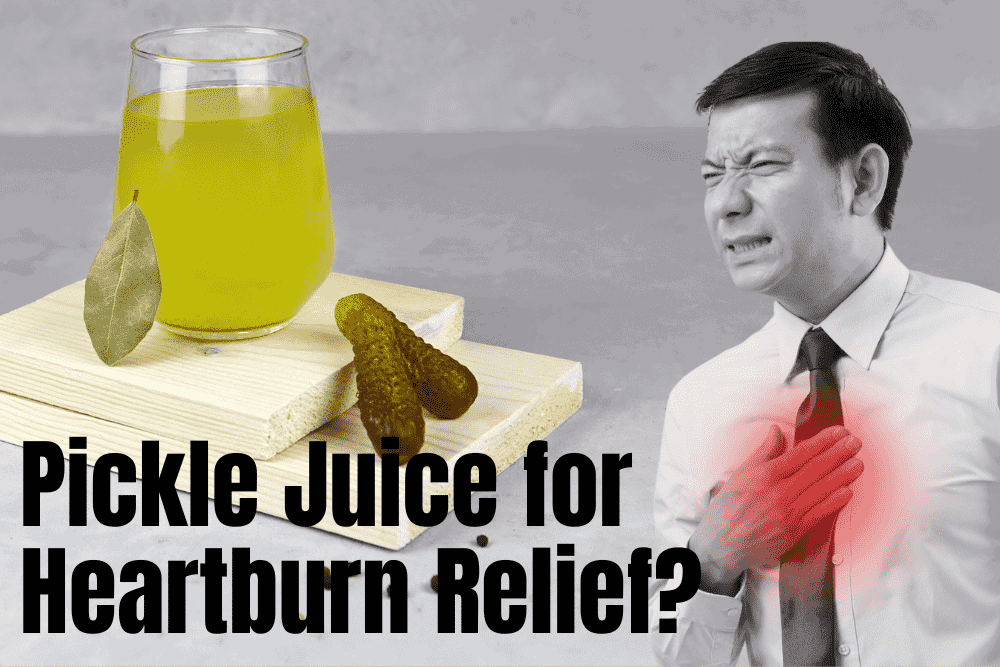
Pickle juice is often shared online as a quick heartburn fix, but there is no research showing it works, and because it is acidic and very salty it can make reflux worse for many people. Here is what is actually known, why the idea is popular, and the remedies that do have evidence.
Quick answer: No studies show pickle juice relieves heartburn. Its vinegar is acidic and it is high in sodium, so it may worsen symptoms for some people. Better-supported options are antacids, avoiding trigger foods and late meals, raising the head of your bed and losing excess weight. See a doctor if you have heartburn more than twice a week.

What Is Heartburn?
Heartburn is a burning feeling behind the breastbone, caused by stomach acid flowing back into the esophagus (acid reflux). Frequent heartburn, more than twice a week, may be gastroesophageal reflux disease (GERD). Common triggers include large or late meals, fatty or spicy foods, alcohol, coffee, chocolate, smoking and extra body weight (NIDDK).
Does Pickle Juice Help with Heartburn?
| Claim | What we know |
|---|---|
| Vinegar “balances” stomach acid | No evidence. Vinegar is an acid and can irritate an inflamed esophagus. |
| Pickle juice neutralizes acid | False. Pickle juice is acidic (pH around 3–4), not alkaline like antacids. |
| Probiotics in pickles help | Most store pickles are made with vinegar and pasteurized, so they contain no live probiotics. Fermented pickles do, but their effect on heartburn has not been studied. |
| It worked for me | Individual experiences vary; a small sip may feel soothing for some, but it is not a proven treatment. |
Pickle juice does have one area of real research: muscle cramps. A small study found that drinking about 1 mL per kg of pickle juice shortened electrically induced muscle cramps in dehydrated men, likely through a nerve reflex rather than electrolytes (Miller et al., 2010). That does not apply to heartburn.

Risks of Drinking Pickle Juice
- Very high in sodium: a quarter cup can contain several hundred milligrams of sodium. That matters for people with high blood pressure, heart failure or kidney disease.
- Acidity: can worsen reflux and erode tooth enamel.
- Stomach upset: large amounts can cause bloating or diarrhea.
Remedies That Do Have Evidence
- Antacids (calcium carbonate, magnesium hydroxide) for fast short-term relief.
- H2 blockers or proton pump inhibitors for frequent heartburn, after talking to a pharmacist or doctor.
- Eat smaller meals and stop eating 2–3 hours before lying down.
- Raise the head of your bed by 15–20 cm if you have nighttime symptoms.
- Lose excess weight, which reduces pressure on the stomach.
- Identify personal triggers such as alcohol, coffee, chocolate, peppermint, fatty or spicy food.

When to See a Doctor
- Heartburn more than twice a week, or lasting several weeks despite treatment
- Difficulty or pain when swallowing, vomiting, or black stools
- Unexplained weight loss
- Chest pain with shortness of breath, sweating or pain spreading to the arm or jaw: call emergency services, as this can be a heart attack.
Frequently Asked Questions
Is pickle juice acidic or alkaline?
Acidic. Most pickle brine is made with vinegar and has a pH of around 3–4.
Can pickle juice cause heartburn?
Yes, it can trigger or worsen heartburn in some people because of its acidity.
What does pickle juice actually help with?
The best evidence is for shortening muscle cramps. See does pickle juice help with nausea? for another common question.
What drink is good for heartburn?
Water, and for some people low-fat milk or non-citrus herbal tea. Avoid alcohol, coffee and citrus juices during flare-ups.